The Project
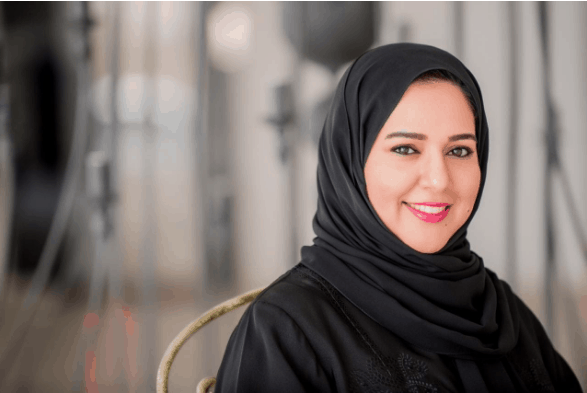
As a mathematician and a doctor of emotional intelligence, Dr. Mayasa AlSowaidi has developed an exceptional sense of questioning and understanding the mechanism of mathematics and its resulting thought.
In her artworks, Dr. AlSowaidi masterfully translates the abstract perfection of mathematical concepts into tangible, visual experiences. Each creation serves as a portal, inviting viewers on an intellectual and emotional odyssey through multidimensional realms. Her versatile use of media unveils hidden realities with sublime precision, challenging our perceptions and expanding our understanding of the intersection between science and art.
AlSowaidi’s work stands as a testament to the harmonious fusion of analytical rigor and creative expression. By bridging the gap between mathematics and emotional intelligence, she creates a unique artistic language that speaks to both the mind and the heart, revealing the often-overlooked beauty inherent in abstract thought.
Corinne Timsit
Curator and Scenograph of the project
The worlds of art and mathematics are two worlds that can seem totally unrelated. One is about beauty, expression, and imagination, while the other is about logic and truth. Great works of art possess this quality, and our task is to search for it and comprehend it. The art of mathematics is stimulated by beauty.
My fascination is with numbers, equations, and geometric shapes, just as I am with color and art. In arithmetic, 1 + 1 = 2, but in art 1 + 1 can equal 11. The difference between them is the freedom that creativity in art gives me to explore the world of imagination and emotions.
Throughout history, mathematics has influenced art in various ways, including perspective, line, shapes, solids, and proportions. By using continuous geometric sequences, it can be used to describe a person. Despite appearing to be an ordinary number at first glance, the golden number has been one of the most controversial in history.
As you can see, the golden ratio has nothing to do with straight lines and can be found in everything around us, living organisms, and humans. All things intended to be beautiful are designed with proportionality based on the balance between lengths, which is exploited in drawings, sculptures, and buildings. The ability to recognize beauty requires sharp awareness. As he realizes he deserves admiration, the question arises: Does mathematics determine beauty?
There has been an association between mathematics and nature and harmony since time immemorial, as it is the true essence of the material world and the entire universe. For decades, the golden ratio was considered a standard of beauty. Plastic surgeon Dr. Stephen Maarcott was able, through his scientific research and studies in philosophy and aesthetics, to manufacture a mask he called (the mask of beauty) and apply it.
World famous people have to calculate the golden ratio in those faces, where the researchers concluded that beauty depends on the golden ratio, and the closer the result of the ratio between facial features to the golden ratio, the more attractive and beautiful it becomes. In an amazing balance, the human body’s main structural divisions and external dimensions are built on this ratio.
In my paintings, I used images of Greek beauty and faces with different features and races, and I added mirrors so that the recipient would find himself part of the painting. I also added shapes for divisions of the golden rectangle as in mathematical theories. Let us search together for the criterion of physical beauty that is determined by that ratio, and here questions overwhelmed me. Beauty with a specific mathematical or numerical criterion? Is it a universal measure that fits all human veins? And where does the true human identity lie in all of this?
Fibonacci sequence and the golden ratio
In the year 1200 AD, while studying the breeding and reproduction of rabbits, the famous Italian mathematician (Leonardo Fibonacci) discovered the sequence named after him, which has become one of the most famous arithmetic sequences to this day. Its idea is that each number in it equals the sum of the two numbers that precede it (…. 0,1,1,2,3,5,8,13,21,34). The calculations of ancient mathematicians call it the divine number or the sacred ratio because it is included in many forms found in nature.
Leonardo da Vinci called this number the golden ratio “Phi” when he realized the secret of the beauty and balance of man, so he assumed an imaginary center of gravity in the human body and used it in many of his works, including the Mona Lisa, the Vitronian Man, and the famous Last Supper painting, where he introduced “Phi” in creating the dimensions of the table. And the dimensions of the walls and the back drawing of the panel.
Dr. Mayasa Al-Sowaïdi